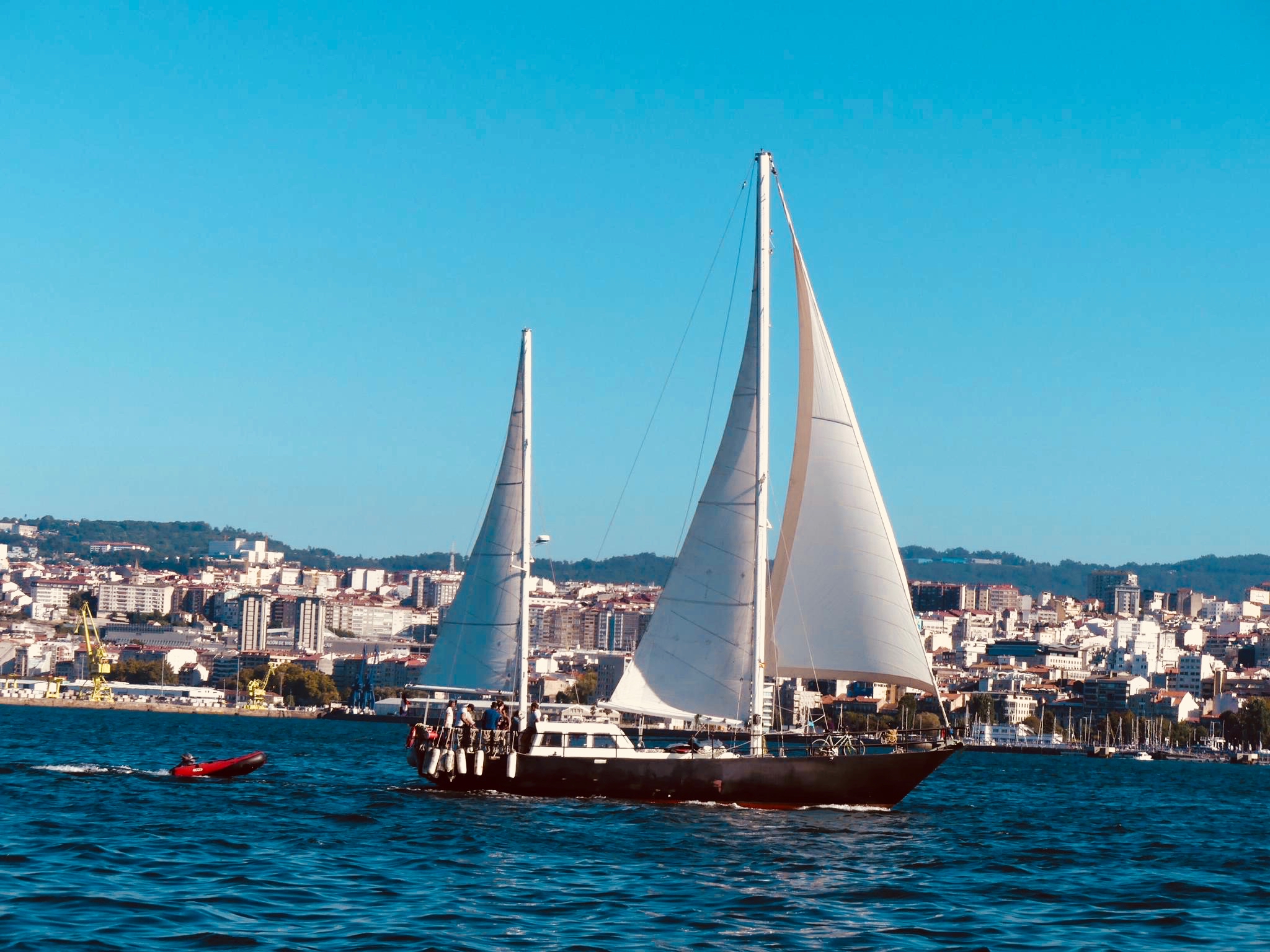
Three weeks at sea. One 1902 schooner. No passengers. This is what happened when 17 people from around the world crossed the Atlantic together.
What happens when 17 strangers step aboard a 124-year-old schooner and sail across 3,000 miles of open ocean?
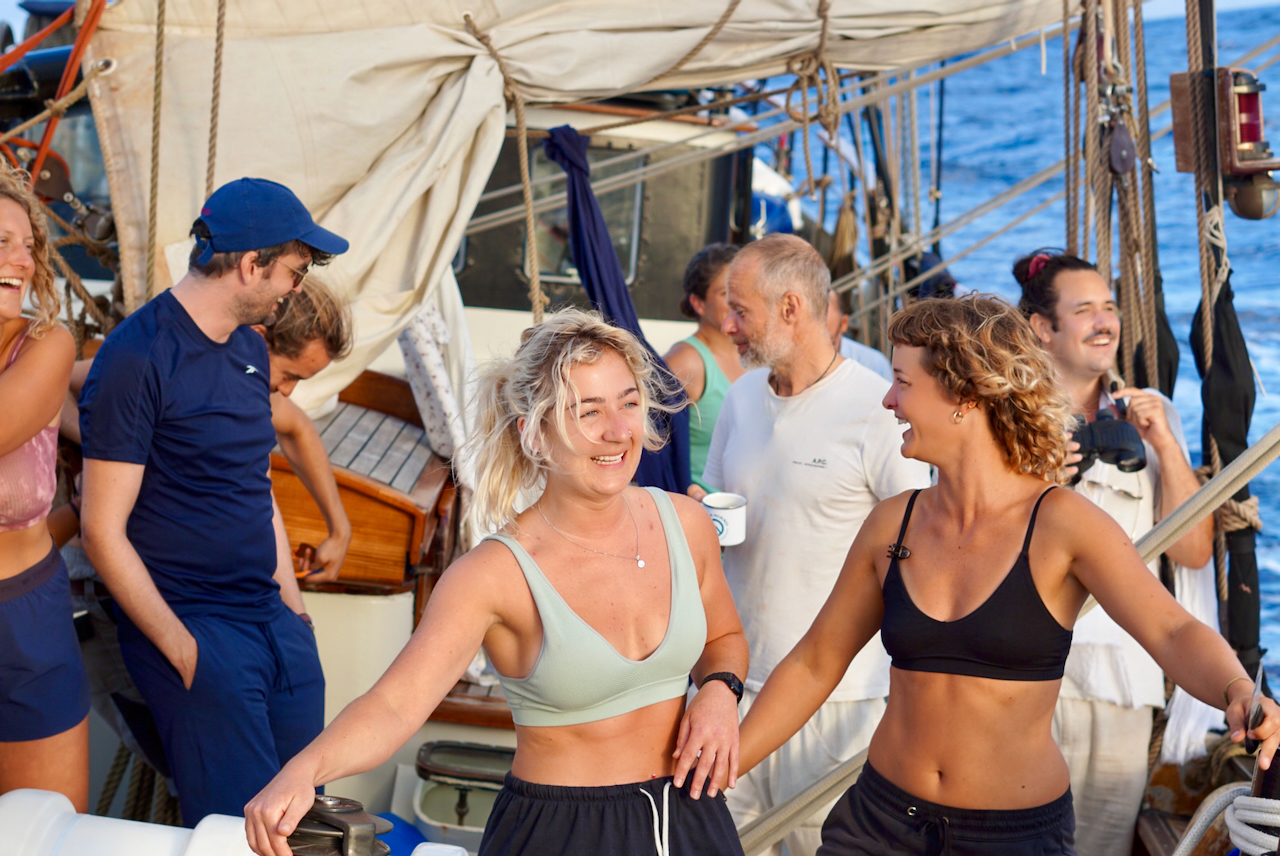
They get seasick. They bake bread. They swim in the middle of the ocean. They watch dolphins. They learn to trust each other. And somewhere along the way, the strangers become a crew.
Watch the film:
17 people, 17 reasons to cross an ocean
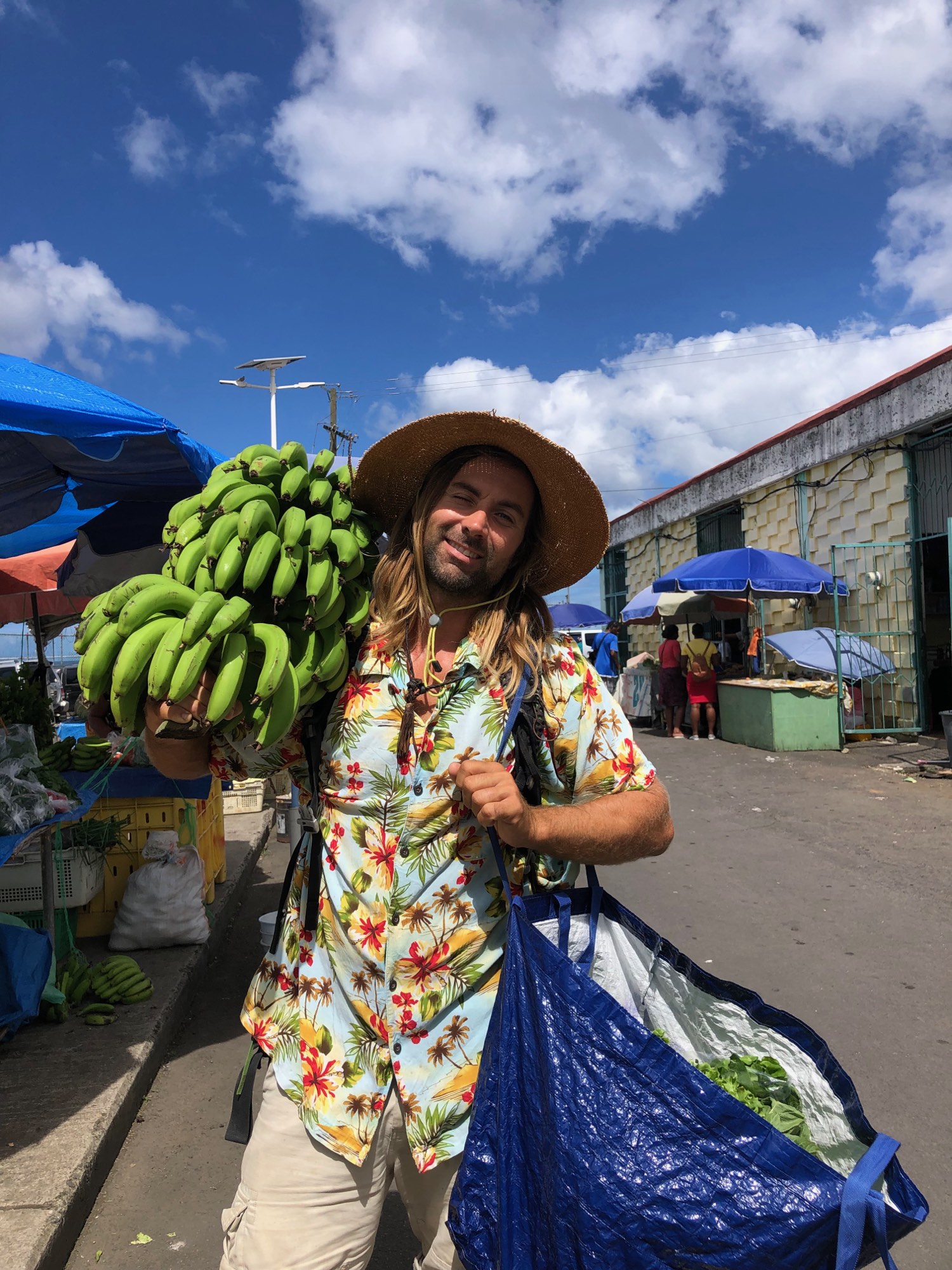
A 68 year old pensioner. Someone escaping a nine to five. Someone who had dreamed of an Atlantic crossing for ten years. A marine biologist. A crew member running the waste on board. People with sailing experience, and people who had almost none.
They came from different countries, backgrounds and stages of life. What they shared was a willingness to leave normal life behind for a few weeks and see what happened.
Peter had spent twelve years building a career and wanted a gap. Until now, he said, the person you are gets measured by your merits and what you achieve, rather than the things you experience and the adventures you go on. He wanted the adventure of an Atlantic crossing, with good people around him.
One crew member had been unhappy in a normal job and wanted to follow a love for the ocean and see where it led. Another had carried the idea for a decade, ever since someone planted it, with no sailing experience at all. And Guido, 68 and a young pensioner, had a family wedding in the Caribbean and thought: why take a plane? So he sailed to it instead.
17 strangers. One boat. Nowhere to go.
Living next to the same people around the clock in a small space is intense. You can’t go home after dinner. You can’t disappear for a few hours. You can’t choose another table. If someone gets on your nerves, you still have a watch together at 4am. And if something goes wrong, you need each other.
Guido put it better than anyone.
On a boat there is no escape. You are going nowhere. So you have to figure each other out. And that is very good.
That is really what this story is about. Not the miles, but what happens to a group of strangers who have nowhere else to go. As one of the crew said, it is a kind of social experiment: sometimes it goes well, sometimes it does not, and the whole art is learning to bring everyone to a good end over a long trip.
It wasn’t all sunsets and dolphins
The night before leaving, nobody pretended to be fearless. The most common worry was not the ocean, it was seasickness. Others named bigger ones out loud: being washed overboard, sharks, and above all what happens if someone gets hurt far from any coast, where a torn sail is repairable but a person is harder.
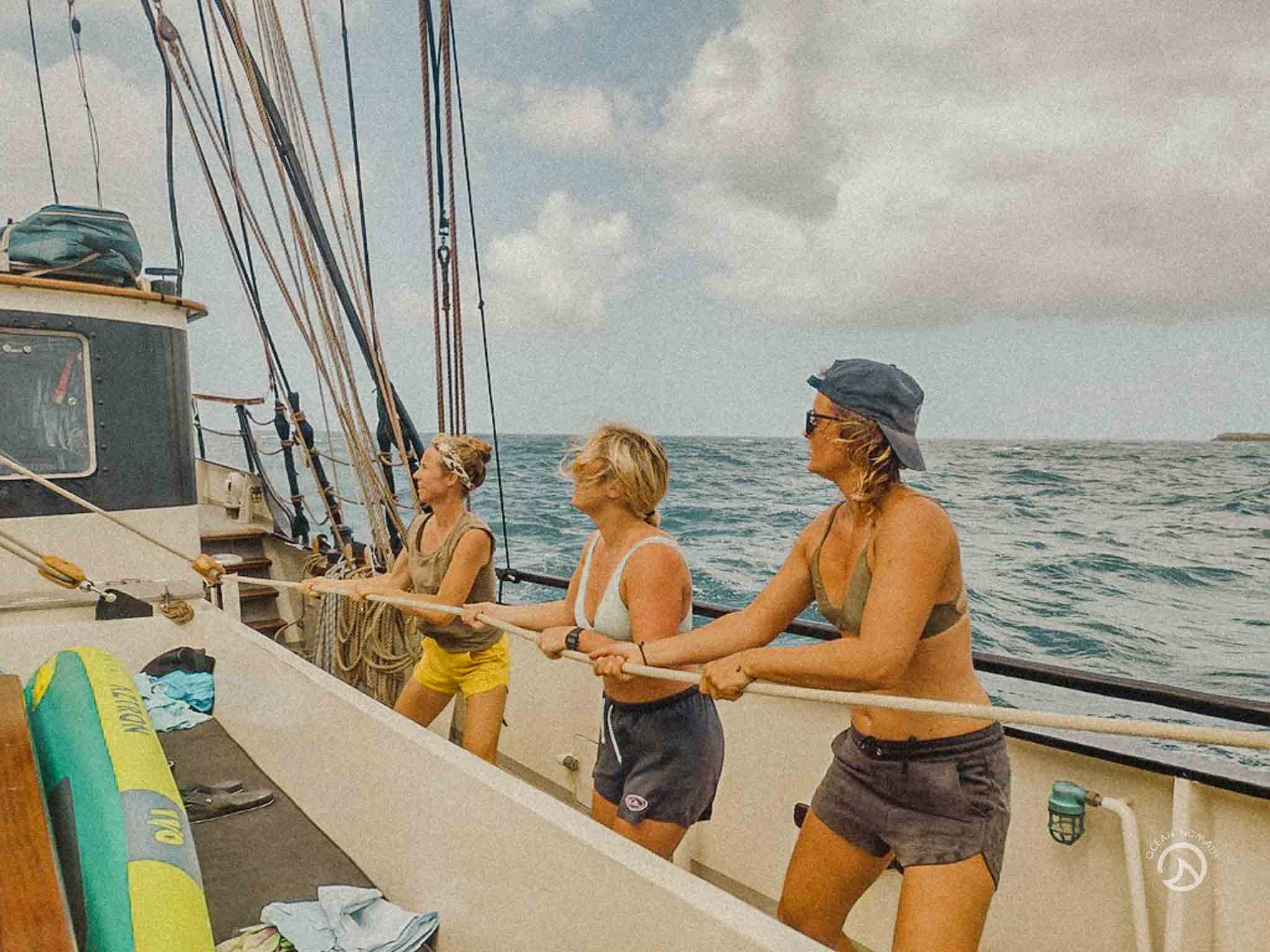
And the days themselves were work. Broken sleep, with watches that ran from midnight to 4am and again in the afternoon. No privacy. Cooking for 17 people, which Paula from Spain took on, learning how much of an art it is to provision for a big crew for weeks and plan for what would be scarce on the far side. Constant tidying, and at the end, cleaning the whole ship. There were slow days too, the wind dropping, the boat sailing alone with no other vessel in sight.
None of that is a warning. It is the point. The hard, ordinary parts are exactly what made the big moments feel so big.
The ocean became the classroom
Out here, learning is not a workshop, it is the day itself.
The crew ran the ship in a watch system around the clock, reading the wind and the weather, trimming sails, keeping lookout, and finding their way by instruments and by the stars on the night watch. Mike, from Canada, ran the waste on board, sorting plastic, paper, glass and metal, cutting it down and cleaning it so the boat could cross an ocean without drowning in its own trash. What surprised him was how much waste normal life makes without you ever noticing.
There was a marine biologist aboard too, working on Sail and Whale, a citizen science project that gathers whale and dolphin sightings reported by sailors and turns them into useful data for science. When a pod of spinner dolphins showed up, the science and the joy were the same thing.
Sailing by wind avoids the aviation emissions of flying the same route, and the crew tried to keep the impact of the voyage low in other ways too, from sorting and reducing waste to feeding wildlife observations into that citizen science.
The things you don’t forget
Halfway across, the boat stopped in the middle of the Atlantic and the whole crew swam in thousands of metres of blue. Being able to stop in the middle of the ocean and swim in the middle of nowhere, one crew member said, is something they will remember for the rest of their life.
Then a bird appeared.
Somewhere in the middle of the Atlantic, a tiny barn swallow landed on the boat. There was no land for more than a thousand kilometres in any direction. It had somehow found one small schooner in an enormous ocean.
For a crew who had spent weeks watching nothing but sea, the little bird became strangely important. Sometimes it is the smallest things you remember.
This is why we sail this way
An Atlantic crossing does not have to start with owning a boat. That is one of the reasons we created Ocean Nomads.
We wanted more people to experience what happens when you cross an ocean as crew rather than as passengers. You work together, you stand watches, you cook, you fix things, you get tired, you see the stars, you learn the boat. And somewhere along the way, a group of strangers becomes a crew. We do it to connect people to nature and to each other.
The people who join us don’t all look the same on paper. Some have sailed for years, some step onto a boat for the first time. Some are students, some are taking a break from work, some are starting something completely new. What connects them is that they are willing to take part, learn and contribute.
Not everyone has the money. Some still get to go. When someone has the drive but not the budget, we keep a scholarship place open, because we would rather have the right people aboard than only those who can pay.
They came aboard as strangers
Seventeen people boarded Twister as strangers. They stepped ashore weeks later as something else.
Not necessarily lifelong friends, not necessarily people who will ever sail together again. But people who had shared something very few ever will: three weeks, one boat, one ocean, and nowhere else to go.
Watch their story in the film above. And if you want to experience it yourself, you can join us for an Atlantic crossing on the next SV Twister voyage. This winter we sail the full Atlantic circle again across eight legs, and no experience is needed on most of them.
Want the story of the whole expedition? Read our recap of sailing all the way around the Atlantic: the 210-day recap.
See the legs and pick yours: oceannomads.co/trips/sail-around-the-atlantic-twister
Or come into the Ocean Nomads community, where crew and captains meet and these crossings begin.
More tips and tales to live a little wilder
Come sail with us. 💙
Ocean Nomads is a community of sailors who cross oceans. Written from the collective experience of our members and captains.